Mantaraymp
Mantaraympus alatus
Stats

Behavior
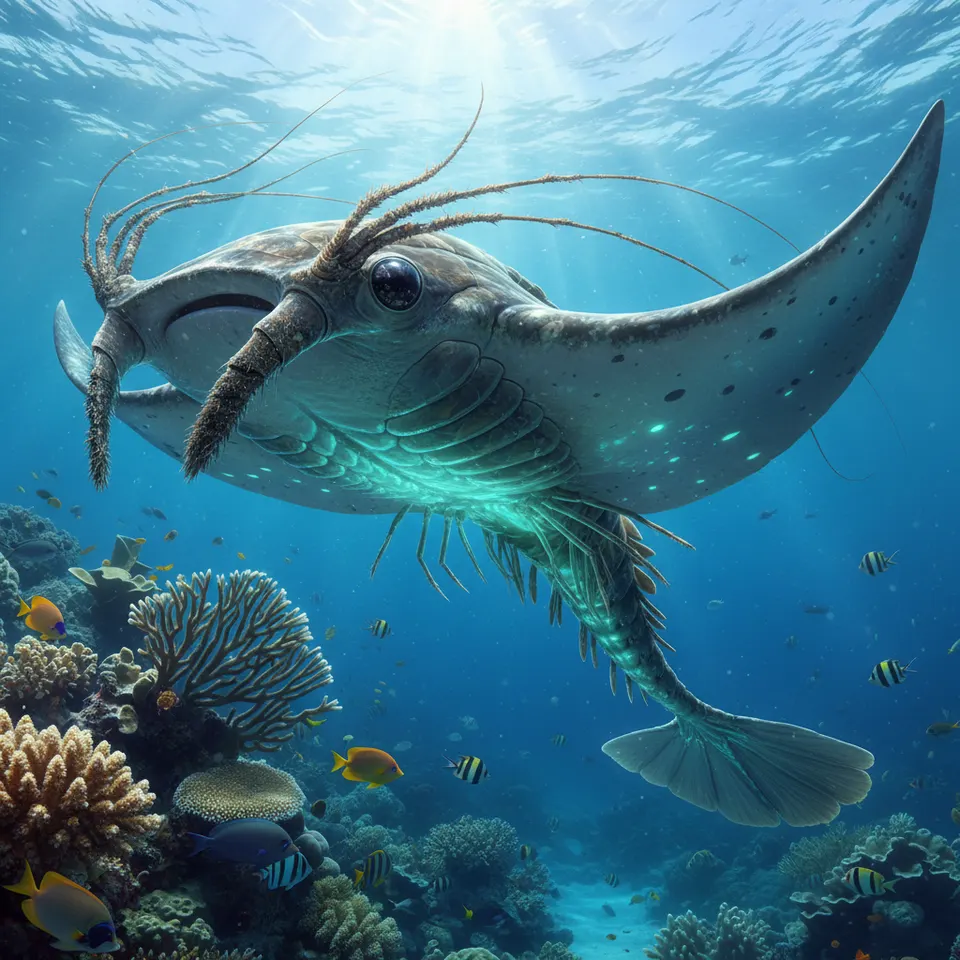
The Mantaraymp exhibits a unique blend of its parent species' behaviors. It glides through the water with the ethereal grace of a manta ray, using its broad, wing-like pectoral fins for propulsion. However, it also possesses the rapid, darting movements characteristic of a shrimp, often deploying a powerful tail flick to escape predators or navigate tight spaces within reef structures. They are generally solitary or found in small, loose aggregations, peacefully cruising for food.
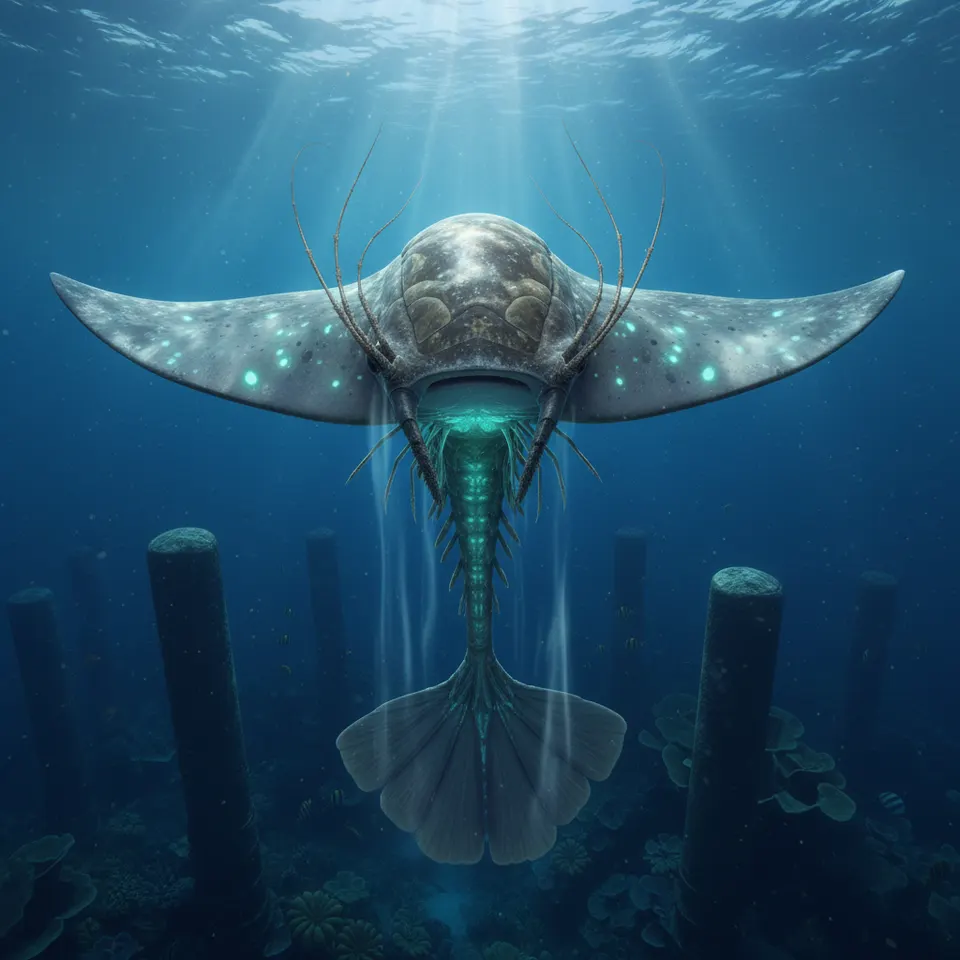
Despite their oceanic nature, Mantaraymps frequently descend to the seafloor, utilizing their modified cephalic fins not only for directing water into their mouths but also for sifting through sand and rubble in search of hidden detritus or small, immobile prey. They are known for their intricate courtship displays involving synchronized aerial breaches and elaborate spiraling dances. When threatened, they can emit a series of surprising sonic clicks, echoing their shrimp lineage, to disorient attackers.
Fun Facts
- 🔬 Mantaraymps possess bioluminescent patches along their underside and antennules, which they can flash in complex patterns for communication or to lure prey in deep water.

- 🔬 Their large, multifaceted eyes, inherited from their shrimp ancestry, grant them an almost 360-degree field of vision, crucial for spotting both plankton and predators.
- 🔬 Unlike true manta rays, the Mantaraymp's 'wings' are semi-articulated, allowing them to curl inward and 'walk' along the seabed using bristly appendages that resemble a shrimp's walking legs, enabling stealthy scavenging.